Infrared vs. Traditional Sauna: Home Sauna Benefits and How to Choose
Disclosure: This post contains affiliate links. If you buy through them, I may earn a small commission at no extra cost to you. I only recommend things that fit the purpose of this site. Read the full disclosure.
Health note: Heat stress is real. Avoid sauna if you are pregnant, have unstable heart disease, low blood pressure or have been drinking alcohol, and check with your doctor about any medications that affect heat tolerance. Hydrate, keep sessions short at first, and leave immediately if you feel dizzy or unwell. I am not a medical professional, and nothing here is medical advice. Please talk with your doctor before starting, especially if you are pregnant or have heart, blood pressure, circulation or other health conditions.
Infrared vs. traditional sauna is the first question most people ask before buying a home sauna. Here I walk through the home sauna benefits suggested by Finnish research, explain how each type heats you, and share indoor infrared and outdoor barrel sauna options for different spaces.
On a gray winter evening, there are few places I would rather be than on a warm cedar bench, with the scent of wood in the air and nothing asked of me for twenty minutes. Sauna is one of the oldest wellness practices in the world. Finnish families have bathed this way for centuries, and today there are more saunas than cars in Finland by some popular estimates. What is new is the growing body of research suggesting that this simple ritual may do real good.
In this post I will walk through the evidence, explain the difference between traditional and infrared saunas, and share a few home sauna options for different spaces and budgets.
Home sauna benefits: what the research suggests
Heart health and longevity
The best-known sauna research comes from the Kuopio Ischaemic Heart Disease Risk Factor Study in eastern Finland, which followed more than 2,300 middle-aged men for about 20 years. Men who used a sauna 4–7 times a week had a 50% lower risk of fatal cardiovascular disease and a 40% lower risk of death from all causes than men who used it once a week.1 The same research group later reported lower rates of dementia and Alzheimer's disease among frequent sauna users.2
These are observational studies, which means they show association, not proof of cause. Frequent sauna users may differ in other healthy ways. Still, the findings are consistent and have prompted a lot of follow-up research.
Blood pressure, circulation and recovery
Heat causes blood vessels to widen and heart rate to rise, much like light to moderate exercise. A systematic review of clinical studies concluded that regular sauna bathing may help with blood pressure, mild musculoskeletal pain and some symptoms of chronic fatigue, while noting that many studies are small.3 Many people also find it simply relaxing, a dedicated space to unwind before bed.
Pairing heat with cold
Many people alternate sauna with a cold plunge, sometimes called contrast therapy. In the Danish winter-swimmer study I mentioned in my cold plunge post, researchers suggested ending on cold to encourage the body to produce its own heat.4 There is no single right way to do this. If you are new, keep it simple: sauna first, a short cool rinse, then rest.
Infrared vs. traditional sauna: what is the difference?
Both types make you warm and sweaty, but they do it differently.
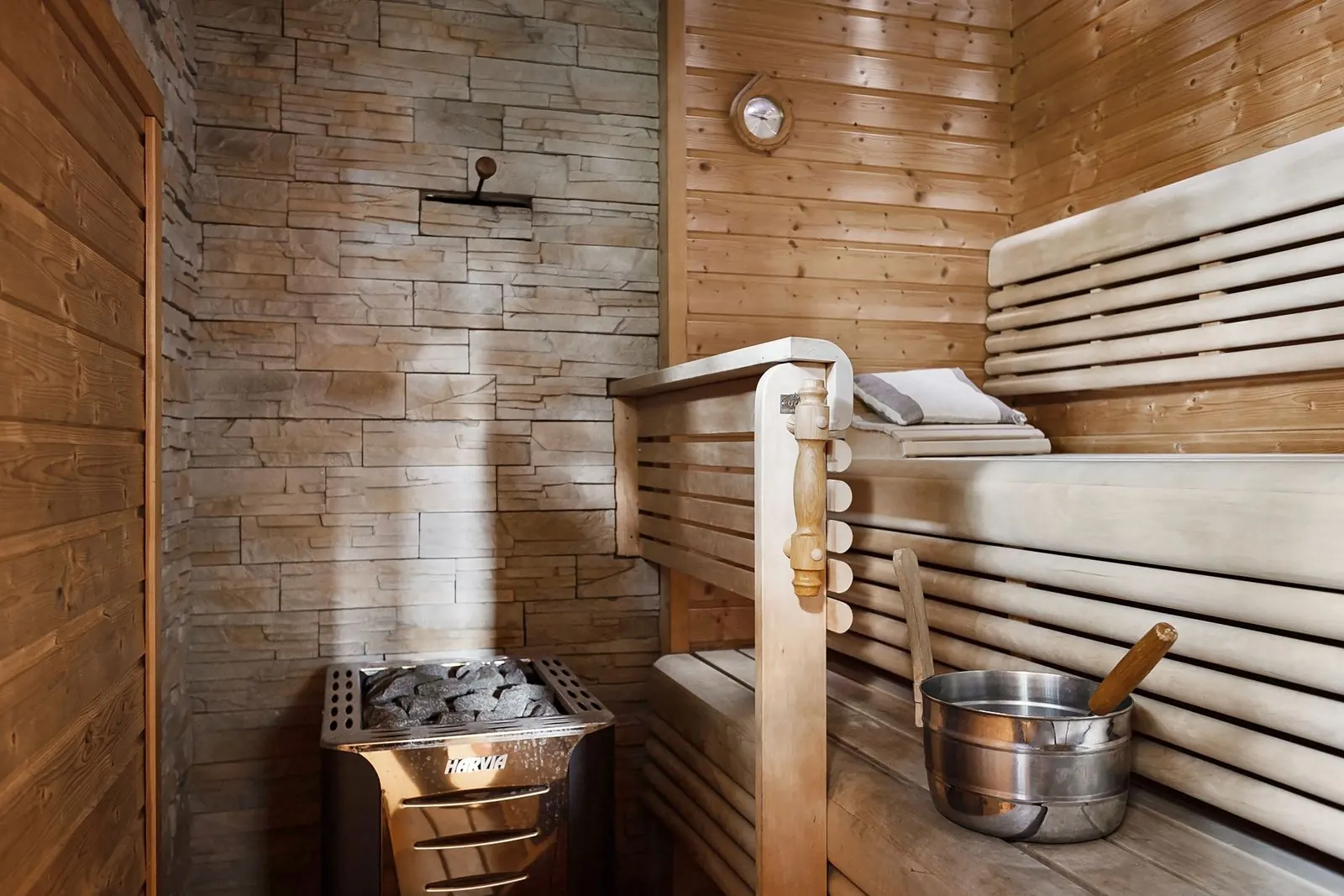
Traditional (Finnish) saunas heat the air, usually to about 160–195°F (70–90°C), with an electric or wood-burning stove topped with stones. Ladling water over the stones creates a burst of steam, called löyly, which raises humidity and makes the heat feel more intense. Nearly all of the long-term Finnish research was done on traditional saunas.
Infrared saunas use panels that emit infrared light, which warms your body more directly while the air stays cooler, often around 120–140°F (49–60°C). Many people find this gentler and can stay in longer. A review in Canadian Family Physician found limited but encouraging evidence for far-infrared sauna in conditions such as high blood pressure and chronic pain, and called for more rigorous studies.5
Choosing between them:
- Choose traditional if you love intense heat and steam, want the experience closest to the research, and have space (often outdoors) and a 240V electrical circuit.
- Choose infrared if you prefer gentler heat, need an indoor model that plugs into a standard outlet, or want a shorter warm-up time.
Either way, a sauna you will actually use is better than a "perfect" one you do not.
Home sauna options: infrared cabins and barrel saunas
Infrared
Lumin Infrared Sauna One
A compact 1–2 person far-infrared sauna in Canadian hemlock that plugs into a standard outlet. A good fit for a spare room or home gym.
- Far-infrared heating panels (backrest and bench)
- Canadian hemlock construction
- Plug-and-play, 110V/220V
- 1-year warranty per the brand
Price: check current price on the retailer's site.
Affiliate link: {{AFFILIATE_LINK}}
Product page: https://orivonwellness.com/products/lumin-infrared-sauna-one
2-Person mPulse Believe
A premium infrared sauna that delivers near, mid and far infrared separately, with red light therapy and tablet controls.
- SoloCarbon heaters, low EMF per the brand
- Red light plus near, mid and far infrared
- Customizable session programs
Price: check current price on the retailer's site.
Affiliate link: {{AFFILIATE_LINK}}
Product page: https://www.sunlighten.com/saunas/mpulse-infrared-saunas/believe/
Indoor Infrared Saunas
A wide range of plug-in indoor infrared models from several makers, useful for comparing sizes and price points in one place.
- 1–4 person indoor models
- Plug-in options for standard outlets
Price: check current price on the retailer's site.
Affiliate link: {{AFFILIATE_LINK}}
Product page: https://recoveryroomdirect.com/collections/indoor-saunas
Traditional
Salem 2-Person Barrel Sauna
A classic cedar barrel sauna for two, made in the USA, with a Harvia electric heater and stones for löyly.
- 6 kW heater; requires 240V/30A hard-wired circuit
- 1 3/8" thick ball-and-socket lumber
- Stainless steel bands and hardware
- Sauna stones included
Price: check current price on the retailer's site.
Affiliate link: {{AFFILIATE_LINK}}
Product page: https://almostheaven.com/products/salem-2-person-barrel-sauna
Golden Designs Arosa 4-Person Outdoor Barrel Sauna
A larger Pacific cedar barrel with an included electric stove, roomy enough to share with family.
- Traditional heat with included stove
- Pacific cedar, outdoor barrel design
Price: check current price on the retailer's site.
Affiliate link: {{AFFILIATE_LINK}}
Product page: https://recoveryroomdirect.com/products/golden-designs-arosa-4-person-outdoor-traditional-barrel-sauna-pacific-cedar
Outdoor Saunas
Scandinavian-inspired outdoor and solo saunas, including the Eldvik 2-person outdoor infrared sauna, for a garden retreat with a Nordic look.
- Outdoor and solo models
- Designed to pair with Valgard cedar ice baths
Price: check current price on the retailer's site.
Affiliate link: {{AFFILIATE_LINK}}
Product page: https://valgardworks.com/collections/all
Before buying any sauna, confirm your electrical requirements with a licensed electrician, check local permit rules for outdoor structures, and plan for a level, well-drained base.
Small comforts for sauna days
Classic Turkish Cotton Robe
For the quiet cool-down after a session.
- 100% Turkish cotton
- OEKO-TEX certified
Price: check current price on the retailer's site.
Affiliate link: {{AFFILIATE_LINK}}
Product page: https://parachutehome.com/products/classic-turkish-cotton-robe-dusk
Arnicare Gel
A non-greasy topical gel many people keep on hand for sore muscles after a long hike or workout.
- Unscented, non-greasy
- Follow label directions
Price: check current price on the retailer's site.
Affiliate link: {{AFFILIATE_LINK}}
Product page: https://www.boironusa.com/product/arnicare-gel/
A simple home sauna ritual to start
- Drink a glass of water beforehand.
- Begin with 5–10 minutes at a comfortable temperature, sitting on a lower bench.
- Step out, cool down with a lukewarm or cool shower, and rest for a few minutes.
- Repeat once if you feel well. Build up gradually over weeks, not days.
- Finish by resting, rehydrating, and letting your heart rate settle.
I have come to treat my time in the heat as a kind of Sabbath in miniature: a small, protected space where nothing is required of me. Whatever you choose, let it be a place of rest.
Frequently asked questions
Is infrared or traditional sauna better?
Neither is better for everyone. Traditional saunas heat the air to about 160 to 195°F and nearly all long-term Finnish research used them. Infrared saunas warm your body more directly at about 120 to 140°F, feel gentler, and often plug into a standard outlet. A sauna you will actually use beats a perfect one you do not.
What are the health benefits of a home sauna?
In a Finnish study of more than 2,300 men followed for about 20 years, those who used a sauna 4 to 7 times a week had a 50% lower risk of fatal cardiovascular disease than once-a-week users. These are observational findings. Reviews also suggest possible help with blood pressure and mild musculoskeletal pain.
How long should you stay in a sauna as a beginner?
Begin with 5 to 10 minutes at a comfortable temperature on a lower bench, cool down, rest, and repeat once if you feel well. Build up over weeks, not days, and hydrate before and after.
Does a traditional sauna need a 240V circuit?
Most electric traditional saunas need a dedicated 240V circuit, while many indoor infrared models plug into a standard outlet. Confirm electrical requirements with a licensed electrician before buying.
Should you do sauna or cold plunge first?
There is no single right way. If you are new, keep it simple: sauna first, a short cool rinse, then rest. Researchers in the Danish winter-swimmer study suggested ending on cold to encourage the body to make its own heat.
Sources
- Laukkanen T, et al. "Association between sauna bathing and fatal cardiovascular and all-cause mortality events." JAMA Internal Medicine 175(4):542-548 (2015). doi.org/10.1001/jamainternmed.2014.8187
- Laukkanen T, et al. "Sauna bathing is inversely associated with dementia and Alzheimer's disease in middle-aged Finnish men." Age and Ageing 46(2):245-249 (2017). doi.org/10.1093/ageing/afw212
- Hussain J, Cohen M. "Clinical Effects of Regular Dry Sauna Bathing: A Systematic Review." Evidence-Based Complementary and Alternative Medicine 2018:1857413. doi.org/10.1155/2018/1857413
- Søberg S, et al. Cell Reports Medicine 2(10):100408 (2021). doi.org/10.1016/j.xcrm.2021.100408
- Beever R. "Far-infrared saunas for treatment of cardiovascular risk factors: summary of published evidence." Canadian Family Physician 55(7):691-696 (2009). pubmed.ncbi.nlm.nih.gov/19602651