Cold Plunge at Home: Benefits, Safety, and How to Begin
Disclosure: This post contains affiliate links. If you buy through them, I may earn a small commission at no extra cost to you. I only recommend things that fit the purpose of this site. Read the full disclosure.
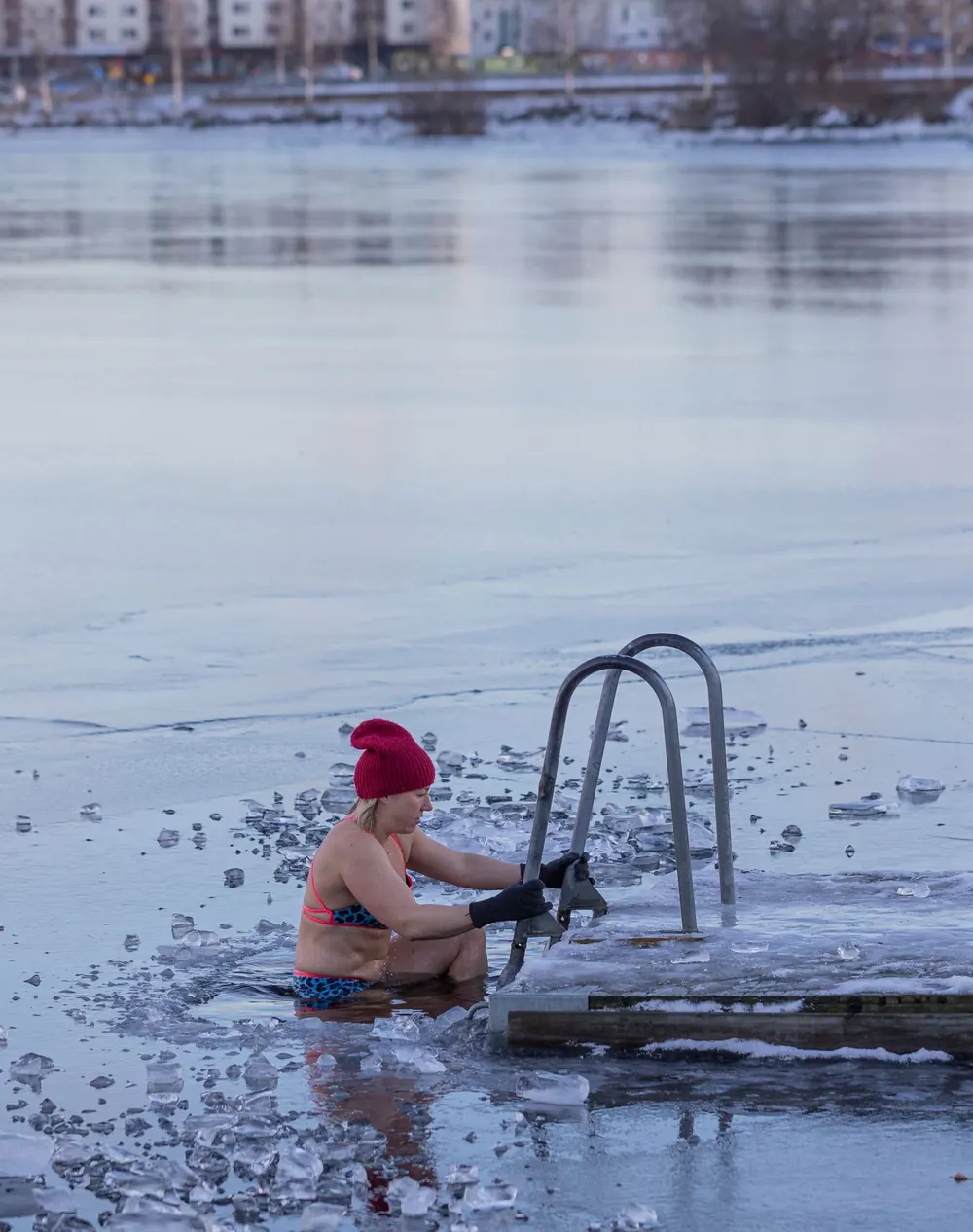
Health note: Cold water immersion causes a sharp 'cold shock' response: gasping, a rapid heart rate and a spike in blood pressure. It can be dangerous for people with heart disease, high blood pressure, Raynaud's, or a history of fainting. Never plunge alone, never plunge after alcohol, and never breath-hold or hyperventilate in water. I am not a medical professional, and nothing here is medical advice. Please talk with your doctor before starting, especially if you are pregnant or have heart, blood pressure, circulation or other health conditions.
Thinking about a cold plunge at home? Below I separate the cold plunge benefits that research supports (mood, alertness, a possible drop in sick days) from the hype, explain a safe beginner temperature and time, and compare simple ice tubs with tubs and chillers.
The first time I stepped into cold water on purpose, every part of me said no. My breath caught, my skin burned, and the thirty seconds felt like ten minutes. Then I stepped out, wrapped myself in a towel, and felt something I did not expect: calm. Clear, bright, settled calm.
Cold plunging has become popular, and with popularity comes a lot of exaggerated claims. In this post I want to separate what the research supports from what it does not, share how to begin safely, and walk through simple and more advanced ways to set up a plunge at home.
What happens in your body during a cold plunge
When cold water hits your skin, your body responds within seconds. Breathing quickens involuntarily, heart rate climbs, and blood vessels near the skin narrow to protect your core. Physiologists call this the cold shock response, and it peaks in the first minute or so. Professor Mike Tipton, one of the leading researchers in this field, has noted that this response is responsible for many cold-water deaths in open water, which is why he calls cold immersion a potential "kill or cure."1 Respect for this first minute is the foundation of safe practice.
Once the initial shock settles, with repeated exposure, your body gets better at managing it. That adaptation, called habituation, is part of why regular plungers report feeling calmer over time.
Cold plunge benefits: what the research supports
A lift in mood and alertness
In a frequently cited Czech study, people immersed in 14°C (57°F) water for an hour showed plasma noradrenaline increases of around 530% and dopamine increases of around 250%.2 These are neurochemicals tied to alertness, focus and mood. Note that an hour is far longer than anyone should plunge at home; the point is that cold is a potent stimulus. Many people describe a similar, milder lift after a few minutes.
Metabolic effects
A 2021 study of experienced winter swimmers in Denmark found evidence of greater cold-induced heat production and brown fat activity, a type of fat that burns energy to create heat.3 The swimmers also practiced sauna, so this is about a combined routine, and the authors suggested a modest weekly dose: about 11 minutes of cold and 57 minutes of heat spread across the week. That is far less than social media often implies.
Fewer sick days, in one trial
A large Dutch randomized trial asked participants to end their daily hot shower with 30, 60 or 90 seconds of cold water for 30 days. The cold-shower groups had a 29% reduction in self-reported sick leave compared with controls, although the number of days they actually felt ill was not different.4 In other words, they may have felt more able to function, which is still meaningful.
A caution for strength goals
If you lift weights, timing matters. A study in the Journal of Physiology found that regular cold water immersion right after strength training blunted long-term gains in muscle mass and strength.5 If building strength is a goal, plunge on separate occasions from lifting, or wait several hours.
How to cold plunge at home safely
- Talk to your doctor first, especially if you have any heart, blood pressure or circulation concerns.
- Start with cold showers. End your usual shower with 30 seconds of cold for a week or two. It is the gentlest on-ramp there is.
- Begin warmer and shorter than you think. Around 50–59°F (10–15°C) for 1–2 minutes is plenty at first. You can always go colder later.
- Control the first minute with your breath. Enter slowly and focus on long, slow exhales. Never hold your breath or hyperventilate in water.
- Keep someone nearby, and keep your head above water.
- Rewarm gently. Dry off, dress warmly, and move around. Avoid jumping straight into a very hot shower if you feel lightheaded.
I like to keep a short prayer or a verse in mind while I am in the water. Something simple, like "Be still, and know that I am God" (Psalm 46:10). Stillness in discomfort is a good practice for the rest of life, too.
Setting up a home cold plunge: tubs and chillers
There are three common approaches: a tub you fill with ice, a tub paired with a chiller, or an all-in-one plunge with a built-in chiller. Ice is the cheapest way to start but gets tiresome quickly; a chiller holds a steady temperature and filters the water so you can plunge whenever you like.
Tubs
Ice Barrel 500
An upright, insulated plunge tub made in the USA. Works with ice from day one, and has chiller-ready ports so you can upgrade later.
- 94 gallons; fits people up to 6'9"
- Polyurethane foam insulation in the barrel and lid
- 3/4" NPT chiller ports
- Limited lifetime warranty
Price: check current price on the retailer's site.
Affiliate link: {{AFFILIATE_LINK}}
Product page: https://icebarrel.com/products/ice-barrel-500
Dynamic Cold Therapy Cold Plunge Tubs
A curated range of plunge tubs, from inflatables and cedar barrels to stainless-steel models, with ice-only and chiller-equipped options. A good place to compare styles side by side.
- Wood barrel, stainless and inflatable styles
- Options with Wi-Fi chiller/heater systems
Price: check current price on the retailer's site.
Affiliate link: {{AFFILIATE_LINK}}
Product page: https://recoveryroomdirect.com/collections/dynamic-cold-therapy
Ice Baths & Cold Plunges
Scandinavian-inspired cedar ice baths and cold plunges for those who want the plunge to look like a piece of furniture in the garden.
- Wood-clad ice baths and cold plunge systems
- Matching Frostgard Pro ice bath chiller available
Price: check current price on the retailer's site.
Affiliate link: {{AFFILIATE_LINK}}
Product page: https://valgardworks.com/collections/all
Chillers
1/3 HP Universal Cold Plunge Chiller
A chiller designed to work with most tubs. It cools to 37°F without ice and filters the water, so your plunge is ready on your schedule.
- Cools down to 37°F (3°C)
- 20-micron and sediment filtration with UV sanitation
- Wi-Fi app control and scheduling
- Standard 110V outlet; 2-year warranty per Titan
Price: check current price on the retailer's site.
Affiliate link: {{AFFILIATE_LINK}}
Product page: https://titan-wellness.com/products/all-in-one-1-3-hp-universal-cold-plunge-chiller-gen-v
Ice Barrel Chiller
A 1/2 HP chiller built for the Ice Barrel line, with app control and scheduling.
- Cools to as low as 37°F
- Wi-Fi app with schedules
- Pairs with Ice Barrel 300 and 500
Price: check current price on the retailer's site.
Affiliate link: {{AFFILIATE_LINK}}
Product page: https://icebarrel.com/products/ice-barrel-chiller
About power: plug any chiller into a GFCI-protected outlet and keep cords away from water. Some people ask about running a chiller from a portable power station. It is possible for short periods (Titan lists the 1/3 HP model's input at about 330 W), but a chiller runs for hours, so a battery like the one below is better thought of as backup or off-grid support than a full-time power source. Check the manufacturer's guidance before connecting any appliance.
AC180 Portable Power Station
Battery backup for a chiller pump or for off-grid use, rechargeable by solar.
- 1,152 Wh LiFePO4 battery
- 1,800 W continuous AC output
Price: check current price on the retailer's site.
Affiliate link: {{AFFILIATE_LINK}}
Product page: https://www.bluettipower.com/products/ac180
Warming up afterward
Classic Turkish Cotton Robe
A soft, absorbent robe to wrap up in the moment you step out. Rewarming slowly is part of the practice.
- 100% long-staple Turkish cotton
- OEKO-TEX certified
Price: check current price on the retailer's site.
Affiliate link: {{AFFILIATE_LINK}}
Product page: https://parachutehome.com/products/classic-turkish-cotton-robe-dusk
Women's Hiker Micro Crew Cushion Socks
Warm merino socks for cold feet after a plunge.
- Midweight merino, cushioned
Price: check current price on the retailer's site.
Affiliate link: {{AFFILIATE_LINK}}
Product page: https://darntough.com/products/womens-merino-wool-hiker-micro-crew-cushioned-midweight-hiking-socks
The purpose behind the practice
Cold plunging is not about toughness, and it is certainly not about suffering for its own sake. For me it is a short daily appointment with discomfort that I choose, so that I can meet the discomfort I do not choose with a little more steadiness. Start small, stay safe, and let the practice serve you rather than the other way around.
Frequently asked questions
How long should a beginner cold plunge?
Start shorter and warmer than you think: around 50 to 59°F (10 to 15°C) for 1 to 2 minutes is plenty at first. Even gentler, end your usual shower with 30 seconds of cold for a week or two.
What are the proven benefits of cold plunging?
Studies show cold water sharply raises noradrenaline and dopamine, linked to alertness and mood. A Dutch trial found a 29% reduction in self-reported sick leave among people who ended showers with cold water, and a Danish study of winter swimmers found more brown fat activity. Many larger claims are not well supported.
How many minutes of cold exposure per week?
Researchers in the Danish winter-swimmer study suggested about 11 minutes of cold a week (with about 57 minutes of heat), spread across several sessions. That is far less than social media often implies.
Should I cold plunge after lifting weights?
If building muscle is a goal, avoid plunging right after strength training. A study in the Journal of Physiology found regular cold immersion after lifting blunted long-term gains in muscle mass and strength. Plunge on separate occasions or wait several hours.
Do I need a chiller for a home cold plunge?
No. Ice in a tub is the cheapest way to start, but it gets tiresome. A chiller holds a steady temperature and filters the water so you can plunge whenever you like. Plug any chiller into a GFCI-protected outlet.
Sources
- Tipton MJ, et al. "Cold water immersion: kill or cure?" Experimental Physiology 102(11):1335-1355 (2017). doi.org/10.1113/EP086283
- Šrámek P, et al. "Human physiological responses to immersion into water of different temperatures." European Journal of Applied Physiology 81:436-442 (2000). doi.org/10.1007/s004210050065
- Søberg S, et al. "Altered brown fat thermoregulation and enhanced cold-induced thermogenesis in young, healthy, winter-swimming men." Cell Reports Medicine 2(10):100408 (2021). doi.org/10.1016/j.xcrm.2021.100408
- Buijze GA, et al. "The Effect of Cold Showering on Health and Work: A Randomized Controlled Trial." PLoS ONE 11(9):e0161749 (2016). doi.org/10.1371/journal.pone.0161749
- Roberts LA, et al. "Post-exercise cold water immersion attenuates acute anabolic signalling and long-term adaptations in muscle to strength training." Journal of Physiology 593(18):4285-4301 (2015). doi.org/10.1113/JP270570